Source Stainless Steel Tattoo Cartridge Needle with Membrane for SMP, Body Art, Permanent Makeup
Find 30 listings for stainless steel tattoo cartridge needle with membrane suitable for SMP, body art, and permanent makeup. Buyers can compare specifications like needle diameter, model types, and sterilization methods from verified suppliers in China.
Key considerations
Products List




Comprehensive Sourcing Guide
Strategic Sourcing Guide for Stainless Steel Tattoo Cartridge Needles with Membrane
The global market for professional tattooing equipment has seen a significant shift toward disposable, pre-sterilized cartridge systems that prioritize hygiene and operational efficiency. For procurement specialists and business owners, the core keyword "stainless steel tattoo cartridge needle with membrane" represents a critical component in modern body art and permanent makeup workflows. These devices combine the structural integrity of metal needles with the safety features of a protective membrane and a disposable housing. Sourcing these items requires a disciplined approach to verify material composition, sterilization efficacy, and regulatory compliance, as the stakes involve direct contact with human skin and the prevention of cross-contamination.
Technical Specifications and Material Composition
When evaluating stainless steel tattoo cartridge needles, the primary technical differentiator lies in the needle point material and the housing construction. The supplied product data confirms that the needle points are manufactured from 316L Stainless Steel, a grade widely recognized in the medical and cosmetic industries for its superior corrosion resistance and biocompatibility. This specific alloy is essential for minimizing the risk of allergic reactions and ensuring the needle maintains its sharpness during the tattooing process. The diameter of these needles varies significantly to accommodate different artistic techniques, with observed specifications ranging from 0.15mm up to 0.40mm. Common diameter configurations include 0.20mm, 0.25mm, 0.30mm, and 0.35mm, allowing buyers to source specific gauges for detailed lining or broader shading applications.
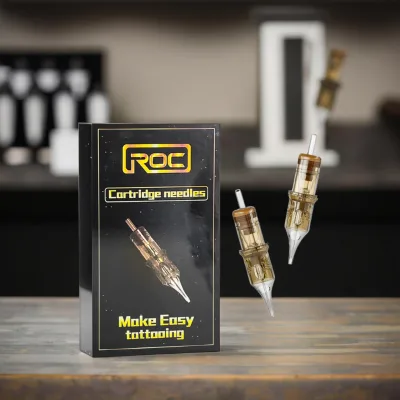
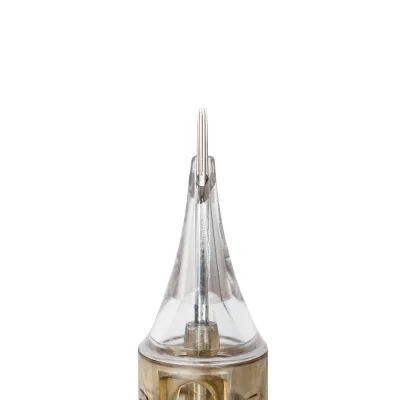
The cartridge housing itself presents a dual-material composition in the observed market. While the needle is stainless steel, the housing components are frequently described as being made of plastic. This plastic housing serves as the disposable unit that attaches to the tattoo machine, ensuring that only the needle tip penetrates the skin while the rest of the mechanism remains sterile and single-use. The product data indicates that these cartridges are designed for specific applications including SMP (Skin Micropigmentation), permanent makeup, and general body tattooing. The "membrane" aspect of the core keyword refers to the internal sealing mechanism that prevents ink from leaking back into the machine and protects the needle from environmental contaminants before use. Buyers must verify that the membrane integrity is maintained throughout the supply chain to ensure the "100% E.O. Gas Sterilized" claim remains valid until the point of use.
Compliance, Certification, and Sterilization Standards
Regulatory compliance is the most critical factor when sourcing medical-adjacent devices like tattoo cartridges. The observed product listings highlight a range of certifications that buyers should verify on a per-supplier basis. Common certifications mentioned include CE Certificate, ISO standards, FCC, and MSDS (Material Safety Data Sheet). The presence of a CE Certificate indicates conformity with European health, safety, and environmental protection standards, which is often a prerequisite for importing these goods into the EU market. Similarly, ISO certification suggests that the manufacturer adheres to international quality management systems, which is vital for consistent production of sterile medical devices.
Sterilization methods are equally paramount. The data explicitly notes that products are "100% E.O. Gas Sterilized," referring to Ethylene Oxide sterilization. This is a standard industry method for heat-sensitive medical devices because it effectively kills bacteria, viruses, and spores without damaging the plastic or metal components. However, buyers must not assume that all listed products share this exact sterilization method without verification. The presence of an MSDS is also crucial, as it details the chemical composition of the materials used, ensuring that no toxic substances are released during the tattooing process. When evaluating a supplier, procurement teams should request batch-specific sterilization certificates and proof of the E.O. gas treatment process to ensure that the "sterile" claim is backed by auditable data rather than marketing assertions.
Cost Drivers and Pricing Dynamics
Understanding the cost structure of tattoo cartridge needles is essential for budgeting and margin analysis. The observed price range for these products spans from $1.90 to $14.70 USD per unit. This wide variance is driven by several factors, including the complexity of the needle configuration, the quality of the 316L steel, the type of membrane used, and the volume of the order. Lower-priced items in the $1.90 range often correspond to basic configurations or higher minimum order quantities (MOQ), while premium-priced items near $14.70 may include specialized needle arrangements, enhanced packaging, or lower MOQ flexibility.
The Minimum Order Quantity (MOQ) is another significant cost driver. The data shows an observed MOQ range from 1 box to 300 units. For small businesses or new market entrants, suppliers offering an MOQ of 1 box (often containing 20 pieces) provide a low-risk entry point. However, larger operations can leverage bulk purchasing to reduce the per-unit cost. The standard packing configuration is typically 20 pieces per box, with 50 boxes per carton, though some variations exist with 10 pieces per box. Buyers should calculate the total landed cost, including shipping expenses, which vary based on the chosen method: Express, Air, or Sea. Sea freight is generally the most cost-effective for large volumes, while Express shipping is necessary for urgent restocking of critical inventory.
Typical Applications and Usage Scenarios
The versatility of stainless steel tattoo cartridge needles with membranes makes them suitable for a diverse range of professional applications. The product data explicitly categorizes usage for Cosmetic, Body Art, Skin Care, and SMP (Skin Micropigmentation). In the permanent makeup sector, these needles are used for procedures such as microblading, lip blushing, and eyebrow shading, where precision and hygiene are non-negotiable. The specific needle models observed, such as EN04, EN05, EN16, EN17, and EN05C, suggest a variety of configurations tailored to different shading and lining techniques.
Furthermore, the "Disposable" attribute is a key selling point for these cartridges. Unlike traditional needle bars that require manual cleaning and re-sterilization, cartridge systems are designed for single-use only. This eliminates the risk of cross-contamination between clients, a major concern in the tattooing industry. The "Advantage" listed as "OEM&ODM" indicates that manufacturers can customize the branding and packaging for specific clinics or tattoo studios, allowing businesses to build their own brand identity. The color coding of the cartridges, with options for Red, Blue, White, Black, and Green, serves as a visual aid for artists to quickly identify needle types and configurations during a session, reducing setup time and potential errors.
Supplier Evaluation and Quality Control Protocols
Selecting the right supplier requires a rigorous evaluation process that goes beyond price comparisons. Buyers should prioritize suppliers who demonstrate transparency in their manufacturing processes and provide clear documentation of their quality control measures. The "prod_packing" details, such as "Box" or "Carton," should be inspected to ensure that the packaging protects the sterile integrity of the product during transit. A compromised package can render a sterile needle unsafe, leading to potential health risks and liability issues.
Quality control should also focus on the consistency of the needle point. Since the needle is made of 316L Stainless Steel, it must be free from burrs or irregularities that could cause skin trauma. Buyers should request samples to test the needle sharpness and the smoothness of the insertion into the skin. Additionally, the "Set" attribute being "Not set" in some listings suggests that these are individual units rather than pre-assembled kits, which may require the buyer to verify compatibility with their existing tattoo machines. It is advisable to test the membrane seal by applying pressure to ensure it does not leak or detach prematurely.
Long-Term Procurement and Supply Chain Considerations
For long-term success, buyers must consider the stability of the supply chain and the potential for customization. The product origin is listed as China, which is a major manufacturing hub for these devices, but buyers should also be aware of the "prod_origin" variation where "Stigma" is mentioned, indicating potential regional differences in manufacturing or branding. Consistency in lead times is critical for maintaining inventory levels, especially for high-volume tattoo studios. While the observed shipping options include Express, Air, and Sea, the actual lead time can vary based on the supplier's production capacity and current global logistics conditions.
The "OEM/ODM: Acceptable" feature offers a strategic advantage for businesses looking to differentiate themselves. By working with suppliers who offer Original Equipment Manufacturer (OEM) and Original Design Manufacturer (ODM) services, buyers can create proprietary product lines with custom branding, specific needle configurations, and unique packaging designs. This approach can help build brand loyalty and justify premium pricing. However, it is essential to establish clear communication channels and quality agreements before committing to large-scale production runs.
Summary of Key Product Attributes
To facilitate quick reference during the sourcing process, the following table summarizes the key attributes observed in the market for stainless steel tattoo cartridge needles with membranes:
| Attribute Category | Observed Specifications |
|---|---|
| Material | 316L Stainless Steel (Needle), Plastic (Housing) |
| Sterilization | 100% E.O. Gas Sterilized |
| Certifications | CE, ISO, FCC, MSDS |
| Diameter Range | 0.15mm to 0.40mm (Common: 0.20-0.35mm) |
| Packaging | 10 or 20 pieces per Box; 50 Boxes per Carton |
| Applications | SMP, Permanent Makeup, Body Tattoo, Body Art |
| Customization | OEM & ODM Available |
| Origin | China (with some regional variations noted) |
| Price Range | $1.90 - $14.70 USD |
| MOQ | 1 Box to 300 Units |
By adhering to these guidelines and focusing on verified technical specifications and compliance data, buyers can secure a reliable supply of high-quality tattoo cartridge needles that meet the rigorous standards of the modern cosmetic and body art industries.
FAQs
What material is used for the needle points?
The needle points are made from 316L Stainless Steel. This alloy ensures superior corrosion resistance and biocompatibility for direct skin contact during cosmetic and body art procedures.
How are these tattoo needles sterilized?
Products are 100% E.O. Gas Sterilized using Ethylene Oxide. This method effectively eliminates pathogens without damaging the plastic housing or metal components before use.
Which certifications should I verify for compliance?
Common certifications include CE Certificate, ISO, FCC, and MSDS. These documents confirm adherence to international safety and quality management standards required for medical-adjacent devices.
What is the minimum order quantity for purchase?
The minimum order quantity ranges from 1 box to 300 units. Many suppliers offer an MOQ of 1 box, which typically contains 20 pieces for small businesses.
Can I request custom branding for these needles?
Yes, OEM and ODM customization is available for these products. Manufacturers can adjust branding and packaging to help build your specific business identity in the market.
What diameter sizes are available for these needles?
Diameter sizes range from 0.15mm up to 0.40mm. Common configurations include 0.20mm, 0.25mm, 0.30mm, and 0.35mm to suit various lining and shading techniques.